
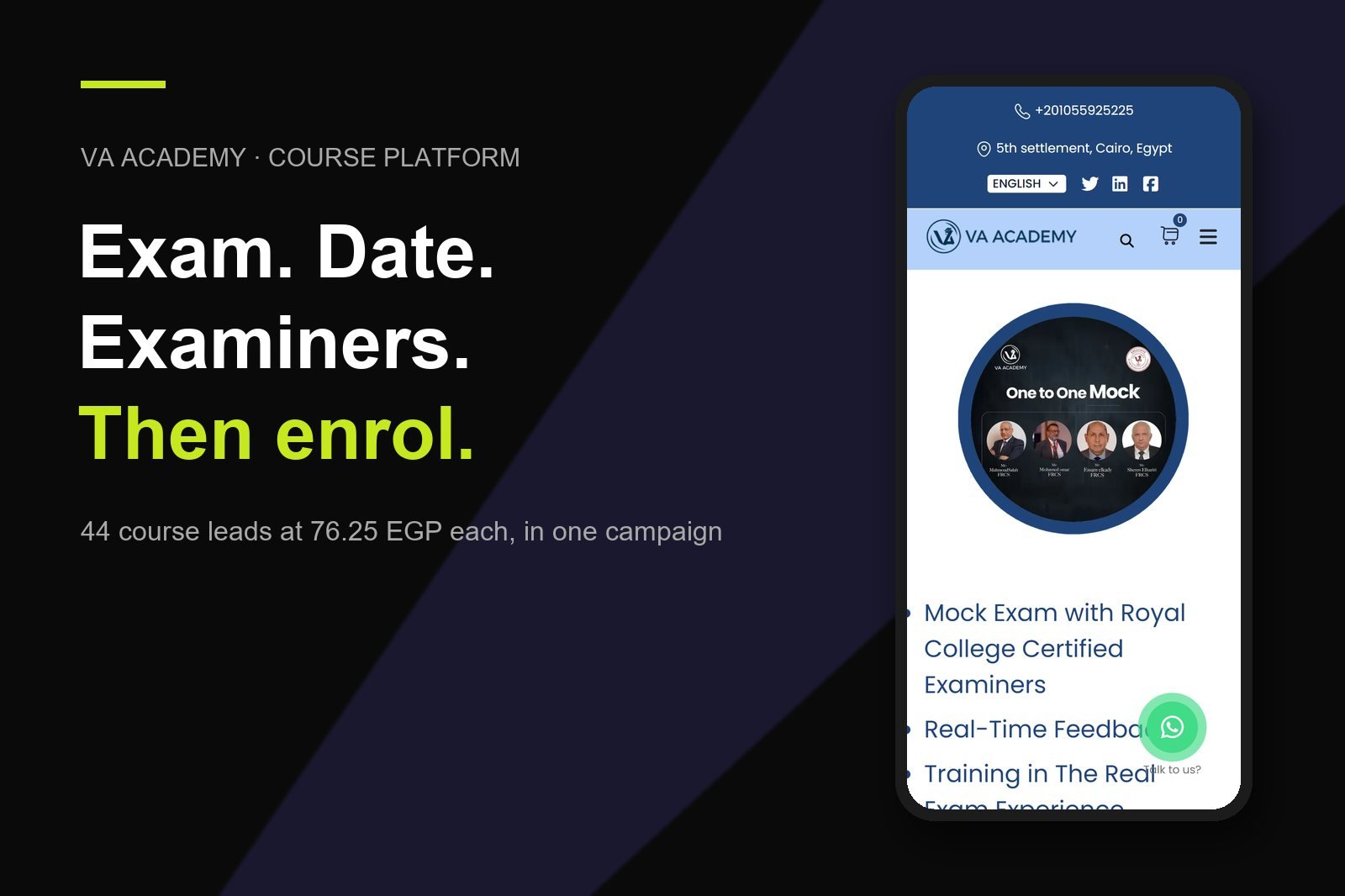
VA Academy prepares surgeons for the MRCS, the Royal College of Surgeons' membership exam, with courses run from Cairo for doctors in Egypt and Saudi Arabia. MAJ built it a course platform rather than a brochure: course pages with enrolment and a student login, recorded lectures, one-to-one mock exams with Royal College-certified examiners, and a WhatsApp line, in Arabic and English. Then we ran the recruitment campaigns that land on it; one campaign for a vascular course brought 44 leads at 76.25 EGP each.
The brief
A medical academy's audience is doctors, and doctors do not respond to hype. They want to know which exam the course prepares for, when it runs, who teaches it, what format it takes and how close it is to the real exam. The academy needed a site that answers those questions and lets a doctor enrol, not one that only describes the academy.
A platform, not a brochure
- Course pages with enrolment. Each course has its own page with the content, the lecturer and a way to sign up, and students log in to reach their lessons.
- Recorded lectures, so a surgeon on shifts can study when they can.
- One-to-one mock exams with Royal College-certified examiners and real-time feedback, presented as training in the real exam experience. For an MRCS Part B candidate, this is the most valuable thing the academy offers, so the site leads with it.
- A WhatsApp line on every page for the questions doctors ask before they commit.
- Arabic and English, because the academy's students come from Egypt and the Gulf.
Courses, dates and examiners
Doctors choose a course by the exam, the date and the examiners. So those three facts sit at the top of every course page, before any description. Names and qualifications of the lecturers and examiners are shown openly; for a professional audience, the people teaching are the main reason to trust a course.
Connecting the platform to the campaigns
The platform was built to receive campaigns. We ran recruitment campaigns for the academy's courses in Arabic and English side by side, led by deadlines: the exam date, the registration close, the seats left. Each campaign lands on the course page it advertises, so a doctor who taps an ad sees the same dates and the same offer, and can enrol or message in one step. In one campaign for the EVLA course, that path brought 44 leads at 76.25 EGP each.
What a course platform needs
- Lead with the exam, the date and the examiners, before any description.
- Let people enrol on the page, with a login for students, rather than only a contact form.
- Show the people teaching, with real names and qualifications.
- Make every campaign land on its own course page, with the same dates and offer as the ad.
- Keep a direct line open on WhatsApp for questions before enrolment.
- Keep the platform tidy: every page, FAQ and course listing real and current, because doctors notice.
In short
VA Academy shows that a medical academy's website works best as a platform: course pages that lead with the exam, the date and the examiners, enrolment on the page, and campaigns that land exactly where they promise. See the VA Academy project and how we build medical sites at Medical Website Design.
Questions
What did MAJ build for VA Academy?
A bilingual course platform: course pages with enrolment and a student login, recorded lectures, one-to-one mock exams with Royal College-certified examiners, and a WhatsApp line, plus the recruitment campaigns that land on it.
What results did the campaigns bring?
In one campaign for the EVLA course, the path from ad to course page brought 44 leads at 76.25 EGP each.
What should a medical course website show first?
The exam the course prepares for, the dates and the examiners or lecturers. Doctors choose courses by those facts, so they belong at the top of every course page.
Should a medical academy's website let doctors enrol online?
Yes. A course page with enrolment and a student login converts better than a contact form, and gives campaigns a page that matches their promise.